
Deep Dive: Architectural Field Review for Foundation Waterproofing & Insulation
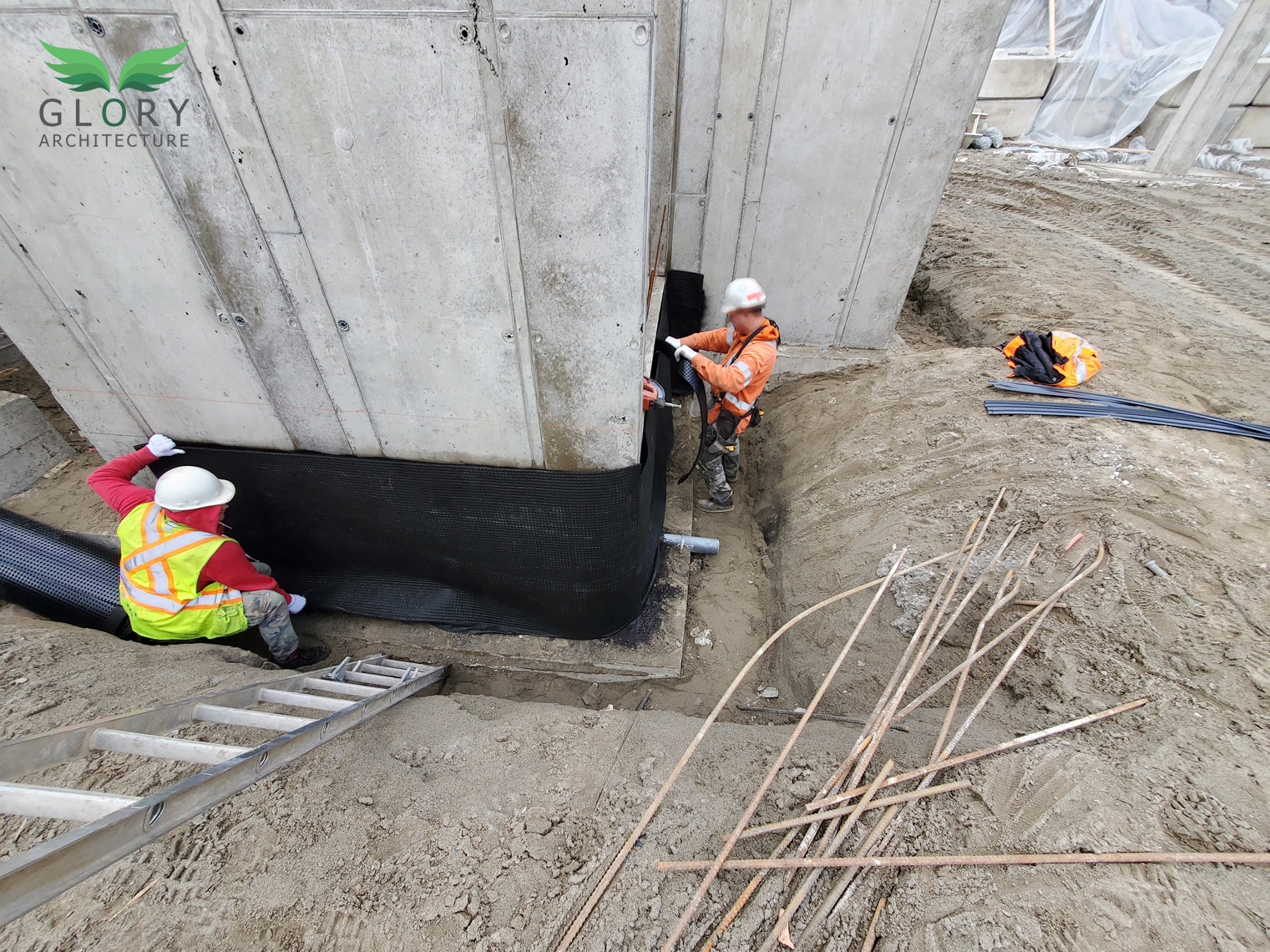
In British Columbia’s diverse climate, from the damp coasts to the snowy interiors, the integrity of a building’s foundation is paramount.
This blog post, part of our series on architectural field reviews, focuses on a critical early stage: Foundation Insulation and Damp-proofing/Waterproofing.
This particular review is fundamental because once the foundation is backfilled, these crucial elements are concealed – making proper installation and review beforehand non-negotiable.
The Unseen Battle: Why Foundations Need Protection
Foundations are constantly exposed to moisture from the surrounding soil. Without adequate protection, this moisture can lead to a host of problems:
- Structural Damage: Water can weaken concrete over time, contribute to freeze-thaw cycles, and potentially lead to foundation cracks.
- Indoor Air Quality Issues: Moisture ingress can lead to damp basements, mold growth, and musty odors, impacting occupant health.
- Energy Inefficiency: Uninsulated foundations allow heat to escape or enter, increasing energy consumption for heating or cooling.
- Material Degradation: Damage to interior finishes, flooring, and even structural elements within the basement or crawl space.
Our field reviews at this stage are about ensuring that the building’s first line of defense against these issues is robustly in place.
Damp-proofing vs. Waterproofing: Knowing the Difference (and When to Apply It)
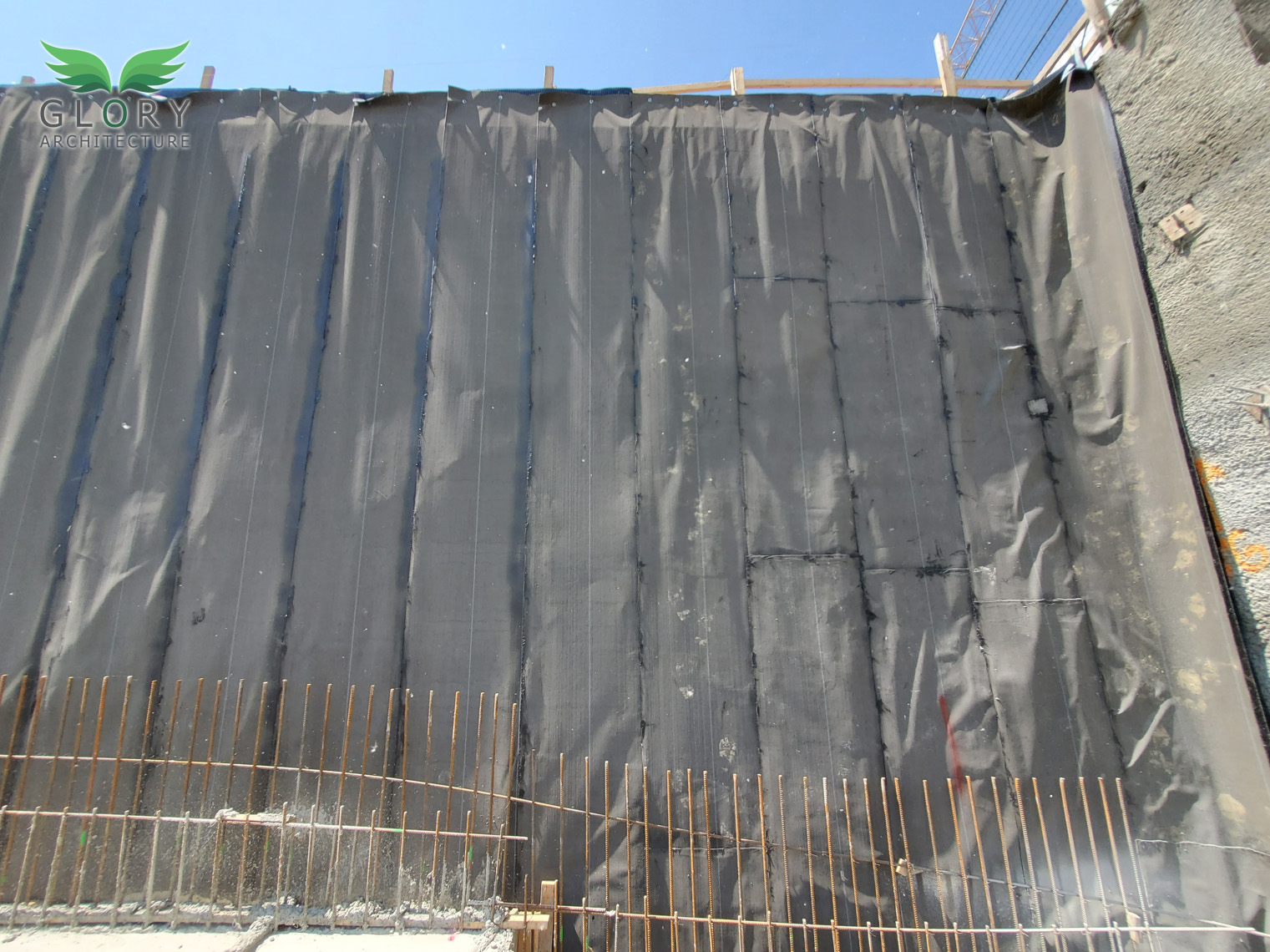
Damp-proofing prevents soil moisture from penetrating surfaces, while waterproofing blocks both moisture and liquid water under hydrostatic pressure.
Damp-proofing is a less robust, cheaper option suitable for dry areas or where external pressure is low, often meeting minimal building code requirements.
Waterproofing provides a complete barrier against water and is essential for areas with high water tables, heavy rain, or hydrostatic pressure.
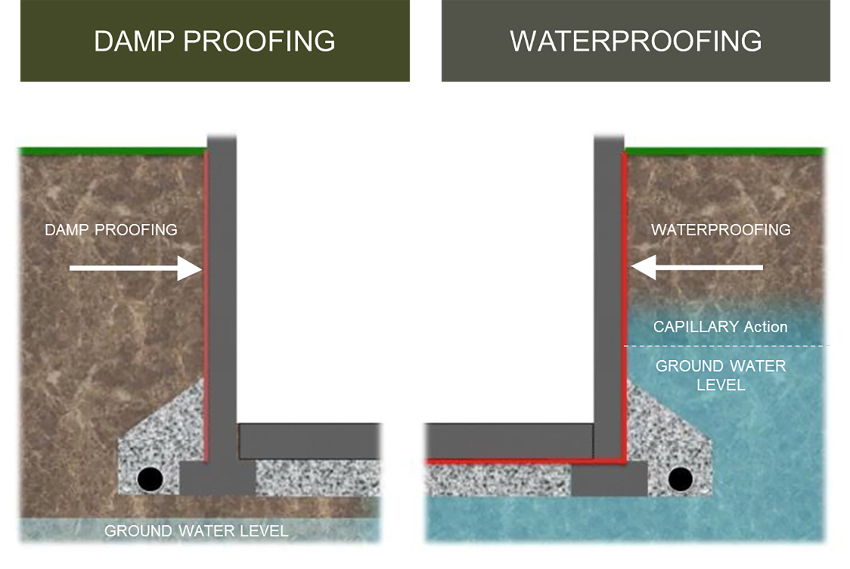
image credit: www.soprema.ca
During a field review, we meticulously check:
Beyond moisture control, thermal performance is key. Foundation insulation minimizes heat loss from the conditioned space of the building into the surrounding soil, contributing significantly to the building’s overall energy efficiency.
- Waterproofing Types: sheet membrane (pre-applied, self-adhered), fluid-applied (liquid-applied), bituminous coatings, waterproofing mortars, and pre-applied systems like blindside waterproofing.
- Damp Proofing Types: fluid-applied membranes (like liquid asphalt or acrylics), prefabricated sheet membranes (such as modified bitumen, PVC, or bentonite clay sheets), cementitious coatings, waterproofing mortars, and elastomeric coatings.
- Insulation Types and Installation: Is it the specified material (e.g., extruded polystyrene – XPS, expanded polystyrene – EPS) with the correct R-value? Is the insulation securely attached to the foundation wall, free of significant gaps or damage?
- Continuity: Does the insulation seamlessly connect with other envelope components, such as the slab insulation or the above-grade wall insulation, to avoid thermal bridging?
- Protection: Is the insulation protected from damage during backfilling?
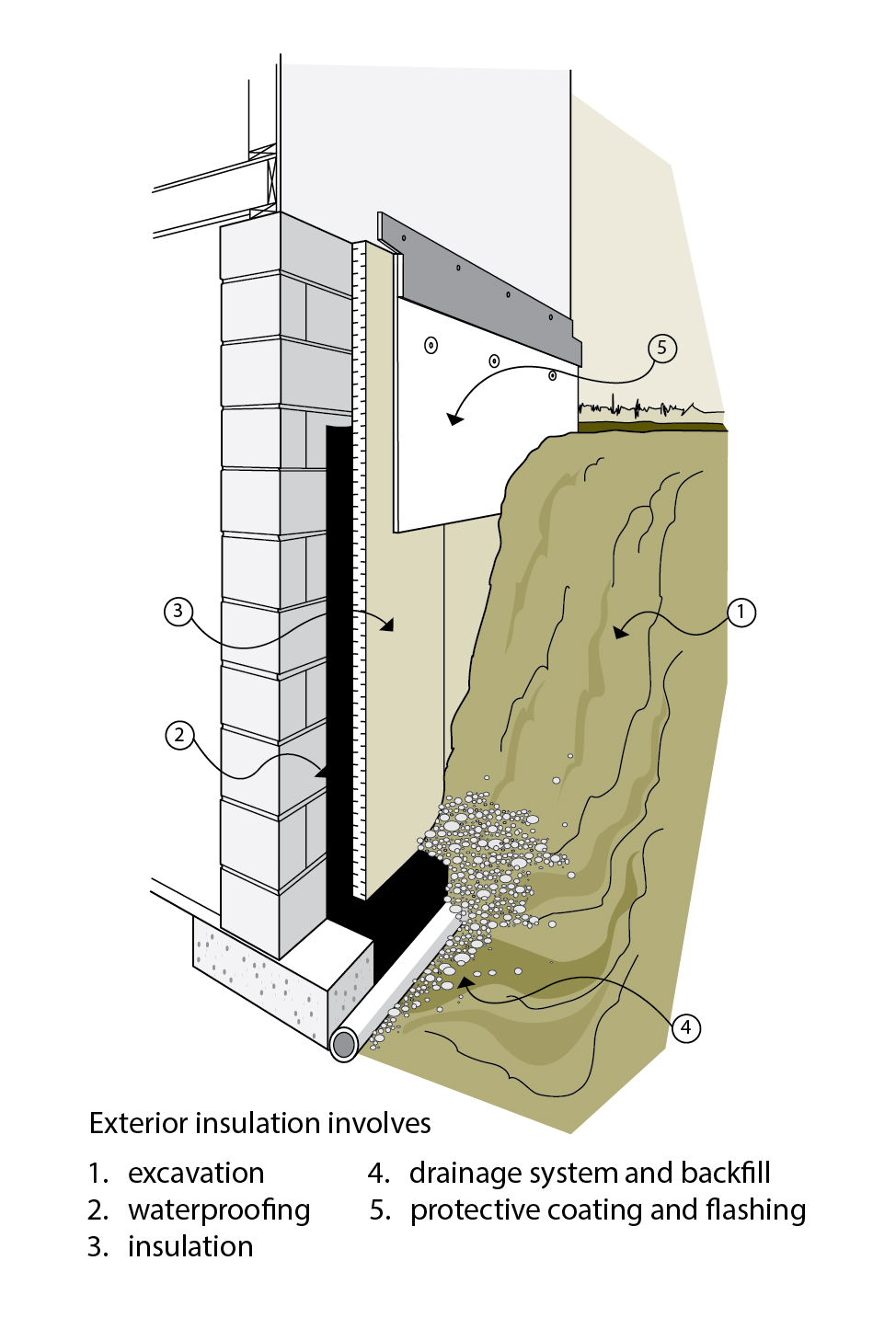
image credit: Keeping the Heat In
Key Field Review Checkpoints for Architects
When conducting a foundation insulation and damp-proofing/waterproofing field review, an architect’s checklist includes, but is not limited to:
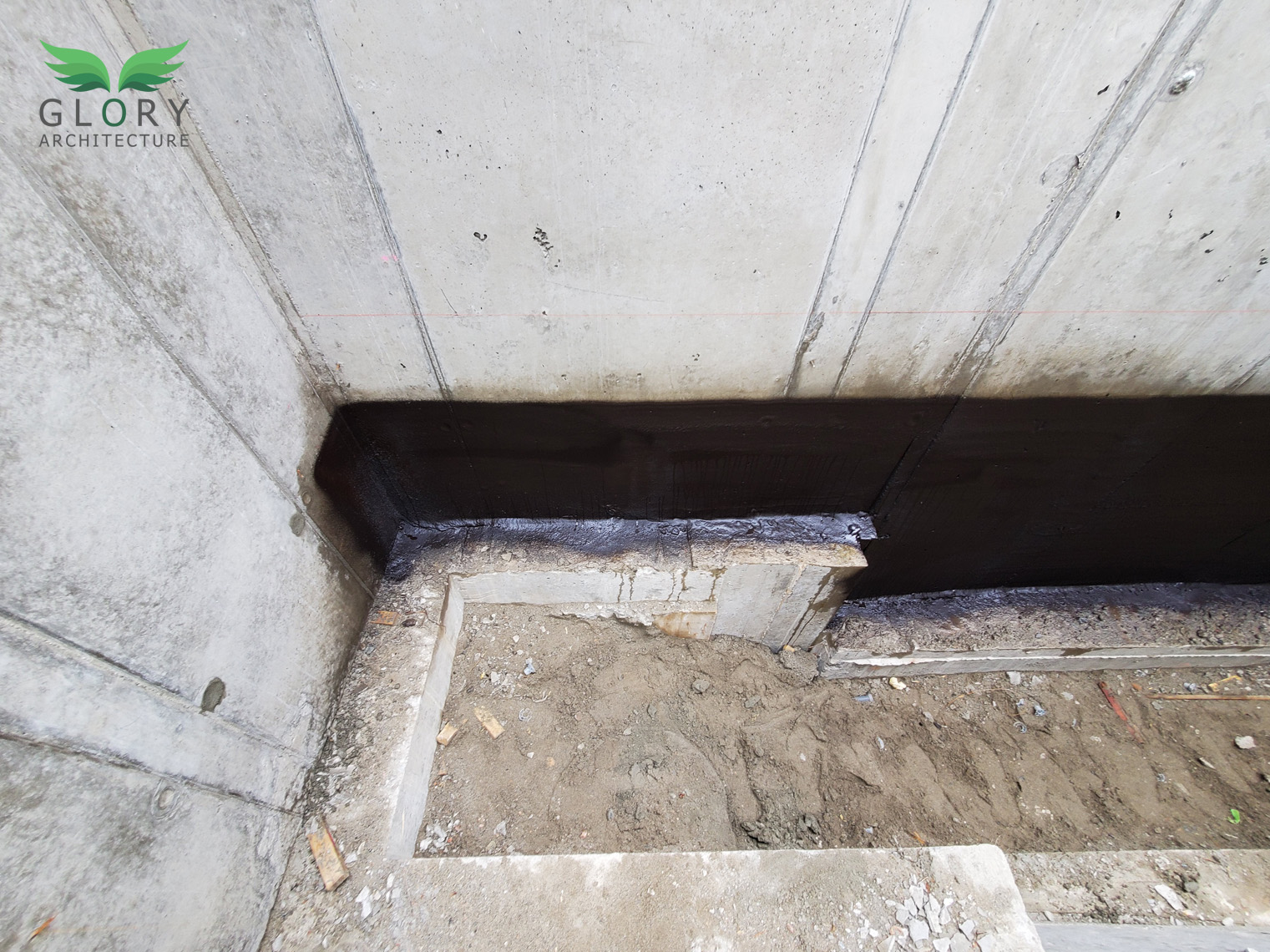
- Surface Preparation: Is the foundation wall clean, smooth, and free of defects (e.g., form tie holes, honeycomb, sharp edges) that could compromise the membrane?
- Product Verification: Is the correct damp-proofing or waterproofing material on site and being used as per specifications and manufacturer’s instructions? (e.g., thickness, number of coats, overlap for sheets).
- Continuity and Laps: Are all laps and seams correctly sealed and overlapped according to manufacturer guidelines? Are transitions at corners and penetrations (pipes, conduits) properly detailed and sealed?
- Coverage: Is the membrane applied uniformly and extending to the specified height (e.g., from footing to grade level, or higher for splash protection)?
- Protection Board: If required, is a protection board (e.g., dimple drainage board or rigid insulation) installed over the membrane to prevent damage during backfilling?
- Drainage System (Perimeter Drains): Are perimeter drains correctly installed at the footing level, sloped appropriately, and connected to an approved discharge? Is the drain rock clean and adequately placed?
- Insulation Installation: Correct type, R-value, secure attachment, and continuity with other building envelope components.
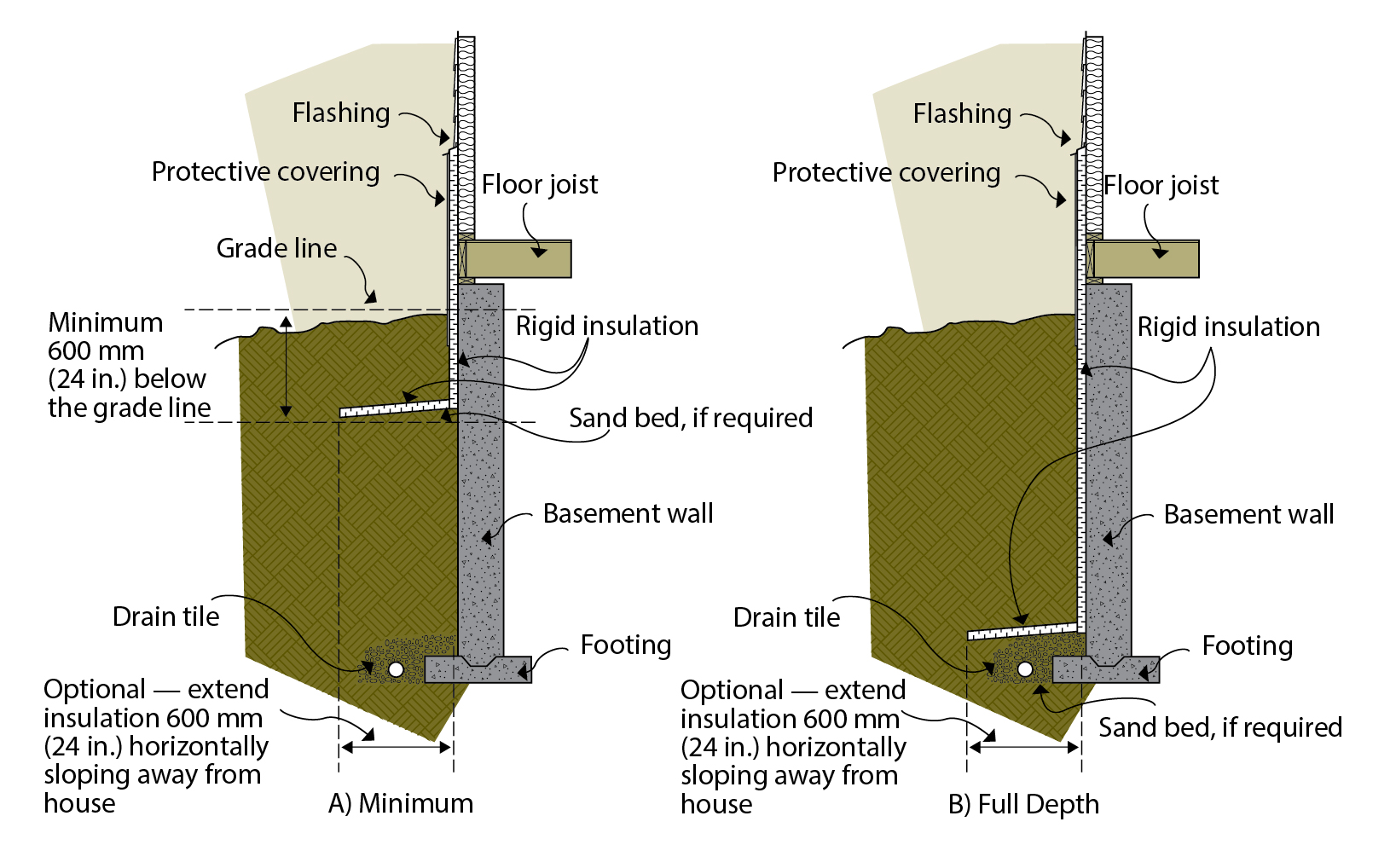
image credit: Keeping the Heat In
The Professional Imperative: Beyond Compliance
For Architects in British Columbia, these field reviews are more than just a regulatory box to tick. They are a demonstration of our commitment under the PGA and Architects Act to public safety, building longevity, and sustainable construction practices. By thoroughly reviewing foundation insulation and moisture protection, we safeguard against future problems, contributing to healthier, more durable, and energy-efficient buildings for our communities.
This early, critical field review sets the stage for the entire project’s success, highlighting why an architect’s oversight is invaluable from the very first stages of construction.
Disclaimer
The information presented in this blog is for general educational and informational purposes only. It is designed to provide an overview of architectural field reviews. This content is not exhaustive and should not be considered professional architectural advice, specific design guidance, or a substitute for expert consultation. Building codes, regulations, and construction techniques are subject to change and specific interpretation based on project conditions. Glory Architecture Inc., its principals, and affiliates shall not be held liable for any decisions, actions, or omissions made in reliance on the information contained within this blog. Always seek the advice of a competent, licensed professional for your individual project needs.